How to reduce miscommunication on WhatsApp and in face-to-face conversations.
We think we can speak for all of you, when we say that miscommunication occurs on a daily basis. Sometimes, people are trying to tell you something, but you feel like they aren’t making any sense. This happens both on WhatsApp and in face-to-face conversations. But don’t worry, we’re here to help! We did research on what WhatsApp users think about miscommunication they encounter both on WhatsApp and in face-to-face conversations. We’ll be explaining what causes miscommunication and how you can prevent or solve such situations.

First of all, emoji, GIFs, and pictures influence a message on WhatsApp. According to our participants, emoji and GIFs can easily cause miscommunication. Often, WhatsApp users assign different meanings to emoji. Then, it becomes unclear what is actually meant by the message. GIFs usually cause miscommunication when they are a reference to, for example, a movie the receiver has not watched. Therefore it’s unclear what is meant by it exactly. However, emoji and GIFs can also help to prevent possible misunderstandings, since they can reflect your intentions. Use a laughing emoji to clarify that you’re joking or happy, or use a GIF that portrays how you feel. This can help to make sure that your message is coming across as intended. Pictures are also a great way to prevent or solve miscommunication. For example, when you’re meeting friends. If you don’t know precisely where they are, they can send a picture of their location. All in all, if emoji, GIFs, and pictures are used in a clear way, they can really help you to communicate successfully.
This one is also only applicable to WhatsApp: group chats. Group chats can be a lot of fun, however, sometimes there’s too many people talking at once. When there are five parallel conversations in a chat, it’s almost impossible to keep track of all of them. It’s hard to fix this, but it is possible to structure the chat a little. Since WhatsApp has introduced the swipe-right option, you can clarify to which message you are responding. This helps to prevent chaos in group conversations.


Next, there’s jokes and sarcasm. It has become clear to us that these can be fun. The problem is when the receiver of the message does not get that you’re joking. Sometimes your sarcasm is just a little too convincing, because the message comes across too seriously. The same goes for jokes: sometimes the receiver just doesn’t understand your sense of humour. Although this happens more often on WhatsApp, due to a lack of nonverbal cues, it definitely also happens face-to-face. For both media, our advice is to use an extreme context. This makes sarcasm or the meaning of the joke more obvious. On WhatsApp, it helps to support your joke or sarcasm with, for instance, a laughing or smiling emoji. In face-to-face conversations, you can support your joke or sarcasm by adjusting your body language, smile for example.
You may have gotten the next one from the section before this. It’s important to match your body language to what you’re trying to say. Try and make sure that the actual content and intentions of a message are supported by your facial expressions, tone of voice, hand gestures, and other nonverbal cues. If you don’t, the receiver won’t know if they’re supposed to respond according to your body language or the content of your message. This is more applicable to face-to-face conversations. However, on WhatsApp you should also think about the way you contextualize a message. Use an emoji that fits your intentions and the content. And if you send a voice message, make sure that your tone of voice matches the information given.
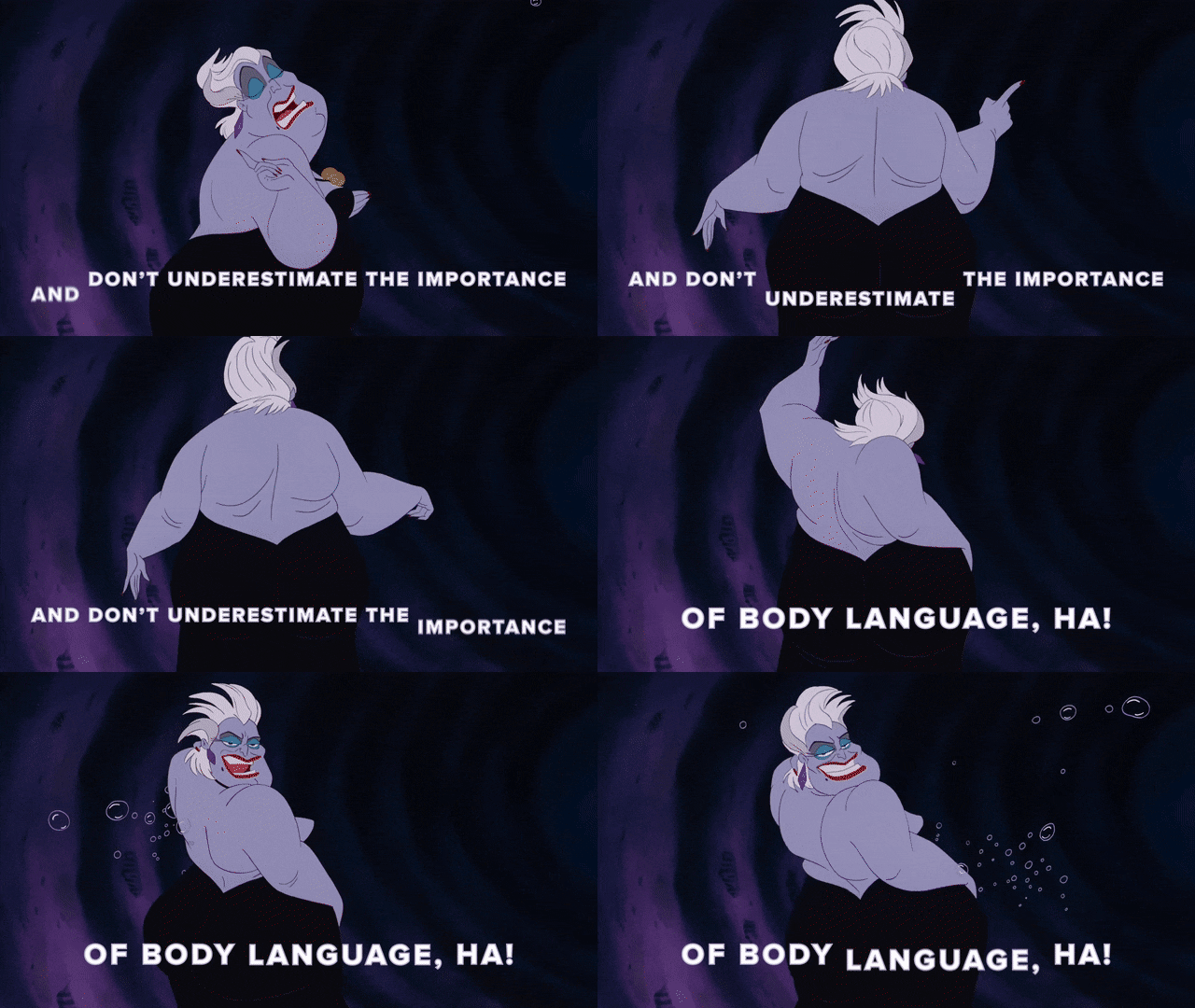

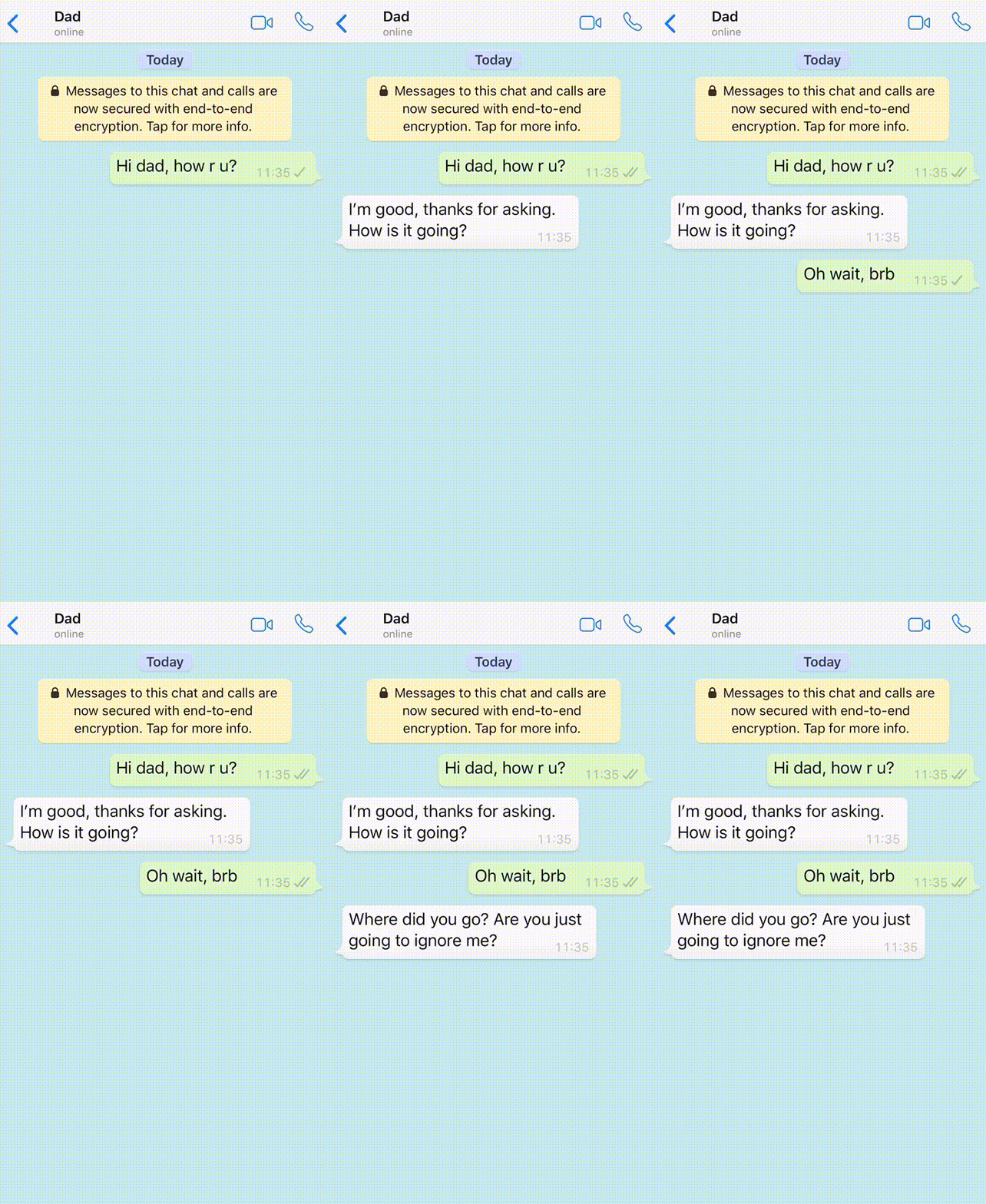
Next up is lack of common ground. Sometimes, when communicating with someone, you simply don’t have the same thoughts on the topic. You’re actually talking about two different things. Obviously, this is very confusing. This can happen for WhatsApp and face-to-face conversations. The solution is also pretty similar. If you notice that the response you are getting is very different from the one you expected, something might be off. So, in that case, just ask your conversation partner what they mean, or rephrase your first message in a clearer way. This will rapidly help you reach common ground.
Following, people use language in all kinds of different ways. First of all, some people have trouble formulating clear sentences. For example when their knowledge of grammar and spelling is not exactly great. However, according to our participants, abbreviations are a more common cause of miscommunication on WhatsApp. Especially when you’re chatting with an older generation, your parents for example. They’re just not familiar with the abbreviations you use. This makes miscommunication more likely to happen. However, it’s quite easy to fix, since the internet can, most likely, answer all your questions about abbreviations.
The internet is also able to help with translating, which can come in handy when you’re communicating with someone from a different cultural background. Of course, this only helps with a language barrier. Unfortunately, a load of other things can cause miscommunication as well. In face-to-face conversations, this could be about cultural habits or rituals. These can differ quite a lot. On WhatsApp, it’s mostly visible through very different meanings that are assigned to some emoji. The easiest solutions for this are, either acquire some basic knowledge of the culture of your conversation partner, or ask them what they mean. You can also invite your conversation partner to do the same. Invite them to ask questions about the way you behave. This helps to reach common ground on WhatsApp and in face-to-face conversations.
At last, we would like to give you some general advice that is applicable to every communication situation you come across. Some of the advice above is quite specific, but these solutions work all the time. When you are communicating, no matter with who, what medium, or how long, try to be aware of the way you come across. Be aware of the content of your message, your intentions, and the way you support these with emoji, GIFs, pictures, body language, etc. Then think about the way you would perceive a message, if someone behaved in that way. Do you think the message is clear? If yes, you’re fine. Otherwise, change your behavior in order to come across clearly. Of course this is easier said than done, but we hope you’ll take our advice. In the end, our main message is: be aware of your conversation partner, take their perspective, and change your behavior accordingly.
References
Nayeon. (2018). Poor unfortunate souls and their body language GIF [Photograph]. Retrieved from https://href.li/?https://gfycat.com/grotesqueshyfennecfox-the-walt-disney-company-disney-lyric-videos
Nguyen, L., Roukema, E., Perego, A., & Pence, C. (2020). Miscommunication on WhatsApp and in Face-to-Face Conversations. Retrieved from https://docs.google.com/document/d/1Dvma8IOXDXmkmbWn4T-Pxxu4AuHhrqwZwcLxMRdPgww/edit?usp=sharing
Starreveld, A. (2019). The tree swing [Illustration]. Retrieved from https://medium.com/@abstarreveld/why-business-and-it-dont-understand-each-other-7561456ed271
We Love Buzz. (2015, November 4). 12 Different Hand Gesture Of Differents Cultures. Retrieved January 27, 2020, from https://www.youtube.com/watch?v=6MhJxPffkhY&feature=youtu.be
 What are the Similarities and Differences of Miscommunication on WhatsApp and in Face-to-Face Conversations?